



Termite fumigation cost: what homeowners actually pay
When a pest inspector confirms drywood termites inside the framing of a home, the conversation quickly turns to tenting the entire structure and pumping it with gas. The price on that quote often surprises homeowners, because the figure bundles inspection, permits, gas, labor, monitoring, and the optional but frequently required tile or roof work. Understanding what drives the termite fumigation cost helps a homeowner read an estimate line by line, compare competing bids fairly, and avoid paying for services the structure does not actually need.
This guide breaks down how professionals price a whole-structure fumigation, what the typical ranges look like for a standard single-family home, and which line items deserve a second look before the work is scheduled.
What whole-structure fumigation actually involves
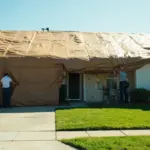
Whole-structure fumigation, sometimes called tenting, is a drywood termite treatment. A licensed crew seals the home under a gas-tight tarp, releases a fumigant gas, typically sulfuryl fluoride, and holds that concentration for a measured period before venting and clearing the structure. The goal is to reach every colony living inside the wood, including members that would be impossible to find with a localized spot treatment.
Because the gas is toxic to people and pets, the home must be vacated. Food, medicine, and certain plants either need to be removed or sealed in special bags supplied by the fumigator. Re-entry is allowed only after a licensed professional measures the gas concentration with a clearance instrument and confirms the structure is safe to enter.
This is different from a localized treatment. Spot treatments, foams, and orange oil injections target visible infestations and can be effective for small, accessible colonies. Fumigation is the whole-house option, and it carries a price tag that reflects the chemistry, the equipment, the crew, and the regulatory paperwork.
Main factors that change the price
Several variables move the final number on a fumigation quote. A useful way to think about pricing is to look at three layers: the structure itself, the infestation, and the contractor’s overhead.
Structure size and shape. Fumigant dose is calculated partly on the cubic volume of the home, not just the square footage. A two-story home with vaulted ceilings contains more air than a single-story ranch of the same footprint, which means more gas and a longer exposure period. Attached garages, basements, and crawl spaces are usually included in the volume calculation because the tent has to seal over them.
Roof type and accessibility. Tile, slate, and certain metal roofing systems can crack under the weight of a tarp or the foot traffic during setup. Crews often remove and reinstall ridge tiles before tenting, which adds labor and disposal fees. Steep pitches, multiple levels, and tight lot lines also slow setup and raise the bid.
Infestation severity. A single confirmed colony in a single piece of furniture-grade wood is a very different job from widespread drywood activity across the attic, fascia, and subfloor. Heavy infestations may push a contractor to recommend a longer exposure time or repeat the treatment in a separate visit, both of which raise the bill.
Local permit and notification fees. Most counties and cities require a fumigation permit and a posted notice on the property. The fee is usually modest, but it is passed through to the homeowner. Neighboring jurisdictions also set rules about when the work can happen, how long the tent must remain in place, and what kind of warning signs are required.
Contractor size and overhead. National brands and large regional operators tend to charge more than small local companies, even when the chemistry and the equipment are similar. Marketing, sales commissions, fleet costs, and corporate warranty programs are baked into the price. Independent operators with a strong local reputation often quote lower because their overhead is leaner.
Repair and clearance work. Real estate transactions often require a Section 1 clearance, which means any damaged wood must be repaired before escrow closes. Some pest control companies bundle wood repair into the fumigation quote, sometimes at a steep markup, while others refer the homeowner to a separate carpentry contractor.
Typical price ranges for a single-family home
The numbers below reflect common ranges for a standard single-family home in the United States, based on the published guidance of pest control trade bodies, state structural pest control boards, and consumer protection agencies. They are not quotes and should not replace a written estimate from a licensed fumigator.
| Home profile | Typical fumigation range | Notes that change the number |
|---|---|---|
| Small single-story, simple roof, light infestation | $1,200 to $2,200 | Standard exposure time, no tile work, easy lot access |
| Average single-story or small two-story, asphalt shingle roof | $2,000 to $3,500 | Includes permits, sealing, gas, monitoring, and clearance |
| Two-story, tile roof, attached garage | $2,800 to $4,500 | Adds $800 to $1,500 for tile strip and replace work |
| Large custom home, complex roofline, heavy infestation | $4,500 to $8,000 or more | Longer exposure, more gas, larger crew, longer tent time |
| Real estate Section 1 clearance with bundled wood repair | Add $1,000 to $5,000 | Depends on how much framing, fascia, or trim must be replaced |
These ranges line up with what major consumer resources and pest control operators report. The California-focused analysis published by Pest Control California similarly places most whole-house treatments in the $1,800 to $3,500 band, with line items for tile work, monitoring, and wood repair pushing totals higher. Homeowners in other regions should expect similar drivers, even if the local labor market sets a different floor and ceiling.
How the line items are usually written
Most fumigation quotes are not a single number. They are a list of components that the contractor has decided to bundle or break out. A reader who can spot each component is in a much better position to compare two competing bids.
| Line item | What it covers | What to check |
|---|---|---|
| Inspection and proposal | Visual inspection, species identification, written scope | Is the inspection free, or is it folded into the final price if you proceed |
| Permit and notification fees | Local government permit, neighbor notices, posted warning signs | Should match the published fee schedule from the local jurisdiction |
| Pre-treatment preparation | Sealing the home, bagging food and medicine, locking or removing pets | Confirm what the homeowner is responsible for versus the crew |
| Fumigant and exposure | Sulfuryl fluoride charge, exposure time, monitoring instruments | Exposure time should follow label and structural pest control board rules |
| Roof or tile work | Stripping and reinstalling ridge tiles, patching underlayment, tarp protection | Watch for vague language like “roof protection” that masks a high markup |
| Ventilation and clearance | Fans, gas scrubbers, clearance measurement, written clearance notice | Clearance must be performed by a licensed applicator with a working gas monitor |
| Wood repair | Removal and replacement of damaged framing, trim, or structural members | Get a separate carpentry bid to compare the bundled price |
| Warranty or retreatment guarantee | Promise to retreat if live termites are found within a set window | Read the fine print on what voids the warranty |
Where homeowners tend to overpay
Fumigation is a regulated service, but the price is not regulated. That creates room for aggressive sales tactics. The patterns below show up often enough that consumer protection agencies have written about them directly.
- Inflated wood repair markups. When a fumigator also offers carpentry, the line for damaged wood repair can run several times the price a standalone carpenter would charge for the same work. A second carpentry bid is the cleanest way to test the markup.
- Spot treatment priced like a fumigation. Localized orange oil or foam treatments have a real role for small, accessible infestations, but they are sometimes sold at a price close to a full tenting job. The chemistry is cheaper and the labor is less, so the price should be lower.
- Subscription monitoring for bait stations. Bait stations around a home are a separate service aimed at subterranean termites, not the drywood colonies a fumigation is meant to kill. Annual monitoring fees in the low hundreds of dollars are common; bundled “general pest” subscriptions in the four figures are not a fair trade for a homeowner who only needs a one-time whole-structure job.
- Repair bonds with narrow coverage. Annual contracts that promise to pay for future termite damage often only pay for retreat, not for the carpentry itself, and only if live activity is documented at the time of inspection. Reading the contract terms before signing is worth the time.
- Same-day signing pressure. Discounts that expire the same day they are offered are a common sales technique. A real discount usually survives a second bid.
How to read two competing bids fairly
Two written estimates for the same home should describe the same scope. If they do not, the homeowner is comparing two different jobs. The steps below turn a stack of paperwork into a useful comparison.
- Match the scope line by line. Check that both bids cover the same square footage, the same cubic volume, the same exposure time, and the same roof type. A bid that quietly excludes the garage or the crawl space is not a like-for-like comparison.
- Confirm the permit responsibility. Some contractors pull the permit themselves and pass the fee through at cost. Others hand the permit to the homeowner or skip it entirely. Skipping a permit is a red flag for any structural pest control job.
- Look at the wood repair line. If one bid bundles wood repair and the other does not, the totals will look very different. Pulling the wood repair out of both bids and comparing the rest is a more honest test.
- Ask for the warranty in writing. Length matters less than the conditions. A long retreatment guarantee that voids if a single service visit is missed is less useful than a shorter warranty with straightforward terms.
- Check the license and the insurance. Every state runs a structural pest control board. The contractor’s license number should be on the estimate and verifiable through the state database. Insurance protects the homeowner if a worker is hurt on the property.
When fumigation is the right call, and when it is not
Not every termite problem needs a tent over the house. The right treatment depends on the species, the size of the colony, and where the activity is located.
Whole-structure fumigation is generally the strongest option when:
- The infestation is drywood, and multiple colonies are spread across the attic, walls, and subfloor.
- The home has a complex layout with inaccessible voids, such as cathedral ceilings or stacked wing additions.
- The owner needs a Section 1 clearance for a real estate transaction, and the lender requires whole-structure treatment rather than spot work.
- Previous localized treatments have not cleared the activity, and the home is still showing fresh damage or frass.
Localized treatment, including orange oil, foam injection, or heat, is often a better fit when:
- The infestation is limited to a single piece of furniture, a small section of trim, or one accessible rafter.
- The homeowner cannot vacate the home for the two to four days fumigation requires, and the infestation does not justify that disruption.
- The activity is subterranean, and bait stations or a liquid soil treatment can target the colony in the ground rather than the structure.
A licensed inspector should always be the one to identify the species and recommend a treatment plan. Identification is the part of the job that drives both the right method and the right budget.
How to prepare the home before the crew arrives
Preparation is part of the work, and the homeowner usually owns a share of it. The list below covers what a typical fumigator will ask the homeowner to handle.
- Food and medicine. Items that are not sealed in glass, metal, or hard plastic are usually bagged in special nylon bags supplied by the fumigator. Some operators recommend removing food entirely; others allow sealed metal cabinets to stay in place.
- Pets and plants. Fish tanks must be sealed or removed, because the gas is lethal to animals. Houseplants are often moved outside for the same reason.
- Personal items. Anything that could be damaged by the gas, including certain electronics, photographs, and leather goods, is typically removed or sealed in the same bags.
- Property access. The crew needs clear access to the roof, the yard, and the interior. Outdoor furniture, grills, and vehicles should be moved away from the home so the tarp can be anchored.
- Utilities. Gas and electric service to the home must remain on for the duration, because the crew uses fans and monitoring instruments. Pilot lights are usually turned off and relit after clearance.
What happens on the day of the fumigation
The actual workflow on the day of treatment is similar across most licensed operators, although the exact sequence varies by crew and region.
- Walkthrough and final check. The crew lead walks the interior with the homeowner one last time to confirm that food, medicine, and personal items are properly sealed or removed.
- Exterior sealing. The crew anchors the tarp over the roof, seals doors and windows, and tapes or pads vulnerable points such as vents and meters.
- Gas release. A licensed applicator releases the fumigant and monitors the concentration with calibrated instruments.
- Exposure period. The structure is held at the target concentration for the time required by the label and the local structural pest control board, usually between 24 and 72 hours depending on the structure and the target pest.
- Ventilation and clearance. Fans pull fresh air through the structure, and the licensed applicator measures gas concentrations room by room before the home is released back to the homeowner.
Safety, regulations, and the role of the structural pest control board
Fumigation is one of the most heavily regulated pest control services. The chemistry is dangerous, the public health stakes are real, and the work is overseen by state-level agencies that license applicators, approve training, and audit field work.
Homeowners can check a contractor’s license through their state’s structural pest control board or department of agriculture. The license number on the estimate should match the state database, and the license class should be appropriate for the work being performed. A company that cannot or will not share its license number is not a company to hire.
Insurance matters for a different reason. If a worker is hurt on the property, the homeowner’s insurance policy should not be the policy that pays. A fumigator with workers’ compensation and general liability coverage protects both the homeowner and the crew.
The broader regulatory framework is also why quotes vary less on chemistry than on overhead. Every licensed operator uses essentially the same fumigant and follows the same label rules. The differences are in crew size, equipment, and the sales organization around the work.
Working termite fumigation cost into a real budget
Most homeowners do not budget for a fumigation in advance, because the infestation is usually a surprise. A practical way to plan the spend is to set aside the median of the typical range, then keep a contingency equal to the cost of any likely add-on, such as tile work or carpentry.
For a standard single-story home on an asphalt shingle roof in a typical metro area, a planning budget of $2,500 to $3,500 is a reasonable starting point, with an additional $1,000 to $2,000 held in reserve for add-ons. For a two-story home on a tile roof, the planning budget should start closer to $4,000, with a similar reserve.
Homeowners in active real estate transactions should also account for the clearance timeline. A fumigation, a repair, and a re-inspection can take two to four weeks from the first inspection to the final clearance letter, so any contract with a closing date should leave room for that sequence.
Common questions to ask a contractor before signing
Asking good questions is the single most effective way to keep the price honest. The list below is short enough to use on a phone call and thorough enough to surface the line items that matter.
- What is the fumigation volume you are pricing, and does that include the garage and any crawl space?
- What exposure time are you planning, and what is driving that number?
- Is the wood repair in this bid, or will a separate contractor handle it?
- Can you break the permit fee, the monitoring fee, and the tile fee into separate lines?
- What is the retreatment guarantee, and what conditions would void it?
- What is the license number, and which state board issued it?
- What is the earliest and latest the tent can go up and come down, and who handles clearance testing?
How termite fumigation cost compares to other treatments
Fumigation is not the cheapest way to deal with drywood termites, and it is not always the most expensive. A useful comparison helps the homeowner decide whether the higher upfront cost is justified.
| Treatment | Typical range | Best fit |
|---|---|---|
| Whole-structure fumigation | $1,200 to $8,000+ | Widespread drywood activity, complex structure, real estate clearance |
| Localized orange oil injection | $500 to $2,500 | Small accessible infestations, no real estate deadline, limited budget |
| Heat treatment | $2,000 to $5,000 | Homeowners who want to avoid chemical fumigant, single-family homes |
| Bait stations for subterranean termites | $500 to $1,200 install, $250 to $350 per year monitoring | Subterranean colonies, long-term monitoring, perimeter protection |
| Liquid soil treatment | $1,000 to $3,000 | Subterranean activity, new construction, pre-treatment |
Whole-structure fumigation is the broadest and most thorough option for drywood termites, and the price reflects that scope. A smaller job is not automatically the better deal, because a partial treatment that misses a hidden colony is a partial expense that has to be paid again.
Where the termite fumigation cost is heading
Three forces are quietly reshaping the market. First, regulatory pressure on fumigant use is increasing, with some states tightening the rules around who can apply the gas and how long the home must stay sealed. Second, the labor market for licensed applicators is tight, and that pressure shows up in the hourly rate that contractors pass through to homeowners. Third, the consolidation of regional pest control companies into national brands continues to push the corporate overhead line higher, which keeps the spread between local operators and large chains visible in the bids.
For homeowners, the practical effect is that the termite fumigation cost is unlikely to drop meaningfully in the next few years, even as alternative treatments improve. Reading each bid carefully, asking for the license and the scope, and pushing back on vague line items remain the most reliable ways to keep the final number fair.
Frequently asked questions
How much does termite fumigation cost for a typical single-family home?
Most homeowners with a standard single-story or small two-story home pay between $1,800 and $3,500 for a whole-structure fumigation. Larger homes, tile roofs, and bundled wood repair can push the total into the $4,000 to $8,000 range or higher.
Does the size of the home really matter that much for the price?
Yes. Fumigant dose is calculated from the cubic volume of the home, not just the floor area. A two-story home with vaulted ceilings uses more gas and requires a longer exposure than a single-story ranch of the same footprint, and the bill reflects that.
Why is the estimate so much higher for a tile roof?
Tile and slate can crack under the weight of a tarp or the foot traffic during setup. Many fumigation crews remove and reinstall ridge tiles before tenting, which adds $800 to $1,500 to the final bill. The work is real, but it is also worth comparing to a stand-alone roofing bid.
Can a homeowner negotiate a fumigation price?
The chemistry and the labor are largely fixed, so negotiation has limits. The wood repair line, the bundled monitoring, and the warranty are the parts that often have room to move, especially once a competing bid is on the table.
How long does a whole-structure fumigation take from start to finish?
Most projects take two to four days from the first day of tenting to the final clearance, plus any preparation time. Real estate transactions with required wood repair usually need an extra week or two for the carpentry and the re-inspection.
Is fumigation the only way to get a Section 1 clearance for a real estate deal?
Section 1 clearance depends on the lender, the local structural pest control board, and the inspector. Fumigation is the most common method, but localized treatments are sometimes accepted when the activity is limited and documented. The buyer’s lender is the final word on what counts.
Do retail sprays or DIY methods work for drywood termites?
Retail sprays can kill the workers that are visible, but they almost never reach the queen and the rest of the colony hidden inside wall voids and roof rafters. For a confirmed drywood infestation, professional treatment is the realistic path to a complete kill.
What should a homeowner do with food and medicine during fumigation?
Items in sealed glass, metal, or hard plastic can usually stay in place. Everything else should be removed or sealed in the special nylon bags supplied by the fumigator. The crew lead will walk the home and confirm what is allowed to stay.
Is a national brand worth the premium over a local operator?
Not usually, for fumigation specifically. Licensed operators use the same fumigant and follow the same label, so the difference is overhead, not chemistry. Independent local companies with strong reputations often quote lower without giving up quality.
What paperwork should the homeowner keep after the work is done?
The clearance notice, the warranty or retreatment agreement, the paid invoice, the permit number, and any post-treatment inspection reports. If the home is sold later, that documentation is what a buyer’s inspector and lender will ask for.

Leave a Reply