



What a whole home air purification system actually does
A couple sits at the kitchen table on a high-pollen spring morning, watching yellow dust settle on the window screen while one of them sneezes for the third time. The furnace fan is running, and the air moving through the house is the same air that is making their eyes itch. A whole home air purification system is built to change that picture by treating the air as it passes through the central heating and cooling system, rather than relying on a small plug-in unit in one room.
Unlike portable air purifiers that clean a limited area, a whole-home system ties into the existing ductwork. When the blower fan runs for heating, cooling, or simply circulation, the air is pulled through one or more treatment stages before it returns to the living spaces. The result is air that is filtered, and in many configurations also oxidized or sterilized, throughout the entire house rather than only near a small machine.
This guide explains how these systems work, what contaminants they are designed to address, how they differ from room purifiers, what to look at when choosing equipment, and what installation and maintenance actually involve. The aim is to give a homeowner enough practical understanding to have a confident conversation with an HVAC contractor or indoor air quality specialist.
How a whole home air purification system works
At its core, a whole home system is a set of components mounted in line with the return or supply ductwork, plus any controls that coordinate with the air handler. The exact technology stack varies by product, but most share a few common stages.
Return-side versus supply-side mounting
Most systems are installed on the return side, just before air enters the air handler. This position lets the filter or purifier treat all the air that the blower is about to condition and distribute. A smaller number of products, especially germicidal UV lights, are mounted on the supply side just after the cooling coil, where moisture and darkness can allow biological growth.
The choice of location is not arbitrary. Return-side placement protects the coil and the blower from coarse dust, while supply-side UV placement targets mold and biofilm that can grow on the wet coil surface. Some advanced systems use components in both locations.
Common treatment stages
A complete whole home air purification system often combines several technologies in series:
- Media filtration. A deep, pleated filter that captures fine particles. High-efficiency media filters are rated by the MERV scale, and some products reach MERV 13 to 16, which captures a meaningful share of fine particles, pollen, and many bacteria.
- Electronic or HEPA filtration. Some products use charged media or true HEPA material to catch even smaller particles that mechanical filters miss.
- Carbon or potassium permanganate media. Adds an adsorbent stage for odors and certain gases that a particle filter cannot catch.
- Photocatalytic oxidation (PCO). A UV light directed at a catalyst surface breaks down certain volatile organic compounds and biological contaminants.
- UV germicidal light. Intense ultraviolet light in the duct or over the coil damages the DNA of mold, bacteria, and some viruses that pass through or grow on internal surfaces.
Each stage addresses a different problem, which is why a system that only adds a better filter is usually a partial solution, and why a system that only adds UV light is also incomplete.
What a whole home system is designed to remove
The performance of a whole home air purification system depends on which stages are installed and how they are sized. Looking at the categories of indoor contaminants is the clearest way to set expectations.
| Contaminant class | Examples | Stage that targets it | Realistic expectation |
|---|---|---|---|
| Coarse particles | Dust, lint, pet hair | Standard filter or media filter | High reduction across the whole house |
| Fine particles | Pollen, fine dust, some smoke | MERV 11 to 16 media, HEPA | High reduction; sizing matters for airflow |
| Ultra-fine particles | Some smoke, combustion byproducts | HEPA, electronic filtration | Meaningful reduction when properly sealed |
| Biological contaminants in the airstream | Some bacteria, mold spores | High-MERV media, UV, PCO | Reduction is significant, not absolute |
| Microbial growth on the coil and drain pan | Coil biofilm | UV light over the coil | Controls growth; does not clean a fouled coil |
| Odor molecules and some VOCs | Cooking smells, pet odors, some chemicals | Carbon or permanganate media | Variable; depends on media mass and contact time |
| Ozone | Outdoor smog, some equipment | Specialized carbon media | Targeted media can reduce indoor ozone |
No residential system removes every contaminant. A reasonable mental model is that particle filtration, gas-phase adsorption, and microbial control each address a slice of the problem, and the right combination depends on which slice matters most in your home.
Whole home versus portable air purifiers
Portable purifiers are useful, but their scope is limited. Comparing the two side by side makes it easier to see where a whole-home approach fits.
| Factor | Portable room purifier | Whole home air purification system |
|---|---|---|
| Coverage area | One room, roughly 200 to 600 square feet | Every room served by the duct system |
| Filter changes | Frequent, often every 6 to 12 months per unit | Centralized, typically once a year for the main media |
| Noise | Fan noise in the room where the unit sits | No new noise source in living areas; some duct whoosh may change |
| Floor space | Occupies a corner or shelf | Hidden in ductwork or mechanical room |
| Whole-house air changes per hour | Effective only in its room | Improves air throughout the home each time the blower runs |
| Upfront cost | Low to moderate per unit | Higher installed cost, often spread across the whole house |
| Best use | Targeted relief in a bedroom or office | Baseline air quality across the entire home |
Many households end up using both: a whole-home system for the baseline and a portable unit in a bedroom for night-time noise control or an extra boost during allergy season.
Key components explained in plain terms
A few terms come up in nearly every conversation about whole-home equipment. They are worth understanding before reviewing a quote.
MERV rating
MERV stands for Minimum Efficiency Reporting Value, a scale from 1 to 20 that rates how effectively a filter captures particles of different sizes. A standard 1-inch fiberglass furnace filter is usually MERV 4 to 8. Whole-home media cabinets are often built around MERV 11 to 16 filters. Higher MERV means finer filtration but also more pressure drop, which can reduce airflow if the blower and filter cabinet are not properly matched.
HEPA
True HEPA filtration removes at least 99.97 percent of particles at 0.3 microns. It is uncommon to put a HEPA filter directly in a residential duct because of the pressure drop, so some products use HEPA material in a bypass configuration or offer a true HEPA module in a return-air cabinet.
Photocatalytic oxidation
PCO combines a UV light with a catalyst surface. The light energizes the catalyst, which then breaks down certain volatile compounds that pass through. Performance varies widely between products, and the technology is better at some contaminant classes than others.
UV germicidal light
UV-C lamps installed in the duct or over the indoor coil emit short-wave ultraviolet light that damages microorganisms. They work best when lamp intensity, exposure time, and proximity to the target surface are all considered. A lamp that is too weak, too old, or blocked by dust does very little.
Carbon and permanganate media
Activated carbon adsorbs a wide range of odor molecules and gases. Potassium permanganate-impregnated media targets specific gases including some VOCs and reduced sulfur compounds. The mass of media and the dwell time of air in contact with it drive effectiveness more than the brand name on the label.
Sizing and matching a system to your home
Undersized equipment is one of the most common causes of disappointing results. A few practical checks help avoid that outcome.
- Match to the blower. Every filter or purifier has a rated airflow in cubic feet per minute (CFM). The HVAC blower should be able to move that volume without an excessive pressure drop. An HVAC contractor can measure static pressure before and after a candidate filter to confirm the match.
- Look at the filter cabinet size. A deeper cabinet with more filter surface area allows better filtration at the same airflow. Moving from a 1-inch slot to a 4- or 5-inch media cabinet is often the single biggest upgrade a homeowner can make.
- Account for supply versus return placement. Return-side equipment treats all the air. Supply-side UV or PCO treats only the air leaving the air handler, so its impact depends on coil condition and humidity.
- Coordinate with the thermostat. Some systems work best when the fan is set to run continuously, which is a small energy cost but a meaningful air-quality gain. Confirm the blower motor can run for long periods without issue.
A useful rule of thumb is that air purifier performance is governed more by how long the air sits near the treatment media than by any single specification on the product sheet.
Installation: what to expect and what to ask
Most installations take a few hours and do not require major duct modification, but the details matter.
Site assessment
A qualified contractor will inspect the existing air handler, measure static pressure, look at the duct layout, and identify a mounting point that gives enough straight duct upstream and downstream for the equipment to work as designed. They will also ask about the home’s priorities: allergies, pets, recent renovation, a smoker in the household, or a new baby.
Electrical and control wiring
Some components, especially UV lights and powered air cleaners, need a 120- or 240-volt circuit. Many modern air handlers can tap a nearby power source, but in some homes a new outlet is needed. UV lamps and certain electronic filters have a separate power supply and a status indicator, which is worth knowing before the installer leaves.
Sealing and orientation
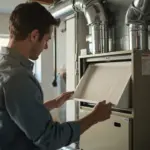
Poorly sealed cabinets leak untreated air around the filter, which is the same as not having a filter at all. A quality install includes mastic or foil tape on every joint, proper gaskets, and the correct filter orientation marked clearly on the cabinet.
What to ask the installer
A short list of questions keeps the conversation focused and surfaces issues before they become change orders:
- What static pressure will the new filter add, and is that within the blower’s range?
- How often does the manufacturer recommend changing the media, and what is the cost of the replacement?
- Is the UV lamp sized and positioned for my specific coil, and what is the expected lamp life?
- Do you recommend a bypass for any stage, and why?
- What is the total installed cost, including any electrical work, and what warranties apply?
Operating costs and maintenance
A whole home air purification system is not a one-time purchase. Filters, lamps, and media all have a service life, and ignoring them turns a good system into an expensive decoration.
| Component | Typical service interval | What changes | Cost driver |
|---|---|---|---|
| Media filter (MERV 11 to 16) | Every 6 to 12 months | Filter cartridge | Filter size and brand |
| Every 2 to 3 years | HEPA cartridge, sometimes pre-filter | Material grade and cabinet size | |
| UV germicidal lamp | Every 1 to 2 years | Lamp, sometimes the ballast | Lamp length and intensity rating |
| Carbon or permanganate media | Every 1 to 3 years | Media canister or refill | Media mass and adsorbent type |
| PCO cell | Every 1 to 2 years | UV lamp and sometimes catalyst matrix | Lamp output and catalyst design |
On top of consumables, electricity for the blower running more often can add a modest amount to monthly bills. Many homeowners find that this cost is small compared with the benefit of running the fan continuously during pollen season or wildfire smoke events.
A practical maintenance habit is to mark filter change dates on a calendar and to glance at UV lamps during annual furnace service. A lamp that looks lit can still be too weak to be effective, so following the manufacturer’s replacement schedule matters more than visual inspection.
Health considerations and realistic claims
Indoor air quality touches health, so it is worth being careful about what a system can and cannot do.
For particle pollution, a well-sized MERV 13 or higher media filter demonstrably reduces the concentration of fine particles in indoor air, which is associated with fewer respiratory symptoms in sensitive groups. For biological contaminants, UV and PCO technologies can reduce certain microorganisms, but they do not make a home sterile, and they are not a substitute for source control such as managing humidity, fixing water leaks, or venting combustion appliances.
For odors and gases, carbon-based media can reduce many common household smells, but no residential system can match the performance of a large industrial adsorber, and the media will eventually be exhausted if the home has a strong ongoing source of VOCs such as active painting or a hobby workshop.
People with specific medical conditions should treat any air purifier as a complement to, not a replacement for, the advice of their physician. The strongest air-quality gains in many homes still come from basics like source control, ventilation, and humidity management.
Common mistakes to avoid
A few recurring issues show up in homes where a whole home air purification system is underperforming.
- Picking a MERV rating the blower cannot support. A MERV 16 filter in a system designed for MERV 8 will choke the airflow, reduce comfort, and strain the blower motor.
- Skipping the return-side cabinet upgrade. Sticking a thick filter into a 1-inch slot is a poor fit, and air will bypass the filter around the edges.
- Ignoring humidity. A purifier does not solve a damp basement. Mold pressure comes from moisture, and a system that filters spores is treating a symptom while the cause grows behind the wall.
- Forgetting the ductwork itself. Leaky, dirty, or disconnected ducts can re-introduce contaminants after the air has been cleaned. Duct sealing is often the highest-value companion to a new purifier.
- Not changing the media on time. A loaded filter loses performance and increases pressure drop. Calendar reminders save a lot of frustration.
Choosing equipment without getting lost in marketing
Manufacturer brochures often lead with phrases like hospital-grade or whole-home, but the meaningful differences are usually narrower. A useful framework is to weigh each product against five concrete questions.
- What is the rated airflow at the recommended filter, and does it match my system?
- What contaminant classes does the product target, and which stages address each?
- What is the annual cost of replacement media, lamps, or filters over a five-year horizon?
- Is the product certified to a recognized standard, and is there independent test data?
- What is the warranty, and what does it require from the homeowner?
A practical approach is to ask two or three local contractors for written quotes that include answers to those questions in plain language. Comparing the answers side by side is more revealing than comparing feature lists.
How this fits with a broader indoor air strategy
An air purifier is one tool among several. A balanced indoor air strategy usually combines:
- Source control, including venting bathrooms and kitchens, choosing low-VOC finishes during renovation, and storing chemicals properly;
- Ventilation, including a balanced heat-recovery ventilator in tightly built homes, which brings in filtered outdoor air without the energy penalty of opening windows in winter;
- Humidity management, keeping indoor relative humidity roughly between 30 and 50 percent to discourage both mold growth and dust mite activity;
- Filtration and purification, where a whole home air purification system plays a central role by treating recirculated air every time the blower runs.
Used together, these four pillars cover most of the gains a homeowner can realistically make. Skipping one tends to limit the others.
A short pre-purchase checklist
Before signing an installation contract, it helps to walk through a short list.
- Identify the top air-quality priorities in the home: allergens, smoke, odors, or general particle reduction.
- Have an HVAC contractor measure static pressure and confirm the blower can handle the proposed filter.
- Decide on a media cabinet depth, usually 4 to 5 inches, to allow high-MERV filtration without choking airflow.
- Choose the right UV placement if microbial control is a goal: over the coil and inside the supply plenum.
- Confirm filter and lamp replacement costs, and stock the first year of consumables with the installer.
- Schedule a follow-up visit 30 to 60 days after installation to verify performance and adjust fan run times if needed.
Where to learn more
For a deeper understanding of how duct-mounted air purification fits with a forced-air system, the Lennox indoor air quality product page describes a range of whole-home options, including media filters, germicidal lights, and combined systems, and explains how each stage contributes to overall performance. For background on the science of indoor pollutants and the role of filtration, the Wikipedia article on air purifiers provides a useful overview of the technologies, the metrics used to rate them, and the limitations of residential equipment.
Frequently asked questions
How is a whole home air purification system different from a room air purifier?
A whole-home system ties into the central ductwork and treats air throughout the house whenever the blower runs. A room purifier treats only the air in a single space, usually a few hundred square feet, and depends on its own internal fan.
Do these systems really help with allergies?
For particle allergies such as pollen and dust, a properly sized MERV 13 or higher media filter meaningfully reduces the concentration of airborne allergens. For other allergy triggers like dust mites, the system is one part of a broader approach that also includes humidity control and regular cleaning.
Will a whole home system remove smoke from wildfires?
It can reduce the concentration of smoke particles indoors, especially with a MERV 13 or higher filter or a HEPA module, and running the blower continuously during a smoke event helps. However, outdoor smoke infiltration also depends on how tight the home is and whether a fresh-air intake is closed during the event.
Does adding UV light make a real difference?
UV light installed over the indoor coil can keep the coil and drain pan cleaner, which reduces one source of biological contaminants. In-duct UV can also reduce certain microorganisms that pass through the light. The lamp has to be the right intensity, properly positioned, and replaced on schedule to work as intended.
How often do filters need to be changed?
For a typical 4- to 5-inch media filter, every 6 to 12 months is common. Homes with pets, heavy cooking, or active renovation may need shorter intervals. UV lamps are usually replaced annually, and carbon or permanganate media every 1 to 3 years depending on the home.
Is ozone a concern with these systems?
Some electronic air cleaners and certain PCO devices can produce small amounts of ozone as a byproduct. Buyers who are sensitive to ozone, or who want to avoid it as a matter of principle, can choose products that the manufacturer specifically states are ozone-free and have test data to back that claim.
How much does installation cost?
Costs vary widely by region and by how much equipment is installed, but most homeowners see a single-component installation in the low four figures and a full multi-stage system higher. Getting two or three written quotes is the best way to gauge a fair price for a specific home.
Can I install a whole home system myself?
Some media filter cabinets are within the range of a careful homeowner, but anything that involves cutting into ducts, adding electrical circuits, or wiring controls is usually best left to a licensed HVAC contractor. Mistakes in sealing or static pressure will reduce performance and can shorten the life of the blower.
Will running the fan all the time increase my electric bill a lot?
The added cost is usually modest, on the order of a few dollars a month for a modern variable-speed blower. Many homeowners consider that cost reasonable for the air-quality benefit, especially during allergy season or smoke events, and the blower uses much less power than the compressor or heating elements.

Leave a Reply