



Epoxy floor cost: what homeowners actually pay
A two-car garage quote of $2,400 and a neighbor’s quote of $5,100 for almost the same square footage are not a sign that one contractor is dishonest. The spread usually comes down to surface condition, the number of coating layers, and whether the price includes concrete repair. Epoxy floor cost is one of those line items where the headline number rarely tells the full story, which is why two driveways that look identical on paper can end up with very different invoices.
Homeowners researching this topic usually want a realistic range before they call a contractor, a clear sense of what drives the price up or down, and an honest comparison between hiring a pro and doing it themselves. This guide covers all three, using the kind of detail a careful project planner would want before signing an estimate.
How epoxy flooring is priced
Epoxy flooring is almost always quoted by the square foot, but the unit price hides a stack of variables. The number a contractor writes on the estimate assumes a specific combination of prep work, primer, base coat, topcoat, and additives. Change any one of those, and the per-square-foot figure moves.
Most residential quotes bundle the following into a single price:
- Surface preparation, usually mechanical grinding or acid etching
- Crack and spall repair in the existing slab
- A primer or moisture barrier where needed
- The epoxy base coat, often 100% solids or a water-based variant
- Decorative flakes, metallic pigments, or quartz broadcast, if selected
- A clear topcoat for UV and abrasion resistance
- Labor, masking, and cleanup
Because the line items are bundled, the only way to compare two quotes is to ask each contractor for a written scope. A low square-foot price paired with a vague scope is one of the most common reasons epoxy floor cost ends up higher than expected.
Typical epoxy floor cost ranges in 2026
National averages shift every year as resin prices and labor rates change, but the bands below are a reasonable starting point for residential work in 2026. Local labor markets and material availability can push figures outside these ranges, especially in regions with high demand for garage renovations or limited contractor supply.
| Project type | Typical size | Installed price range | Per square foot |
|---|---|---|---|
| Single-car garage, solid color | 250 sq ft | $1,200 – $2,400 | $4.80 – $9.60 |
| Two-car garage, solid color | 450 – 500 sq ft | $2,100 – $4,500 | $4.60 – $10.00 |
| Two-car garage, flake broadcast | 450 – 500 sq ft | $2,800 – $5,800 | $6.20 – $12.90 |
| Basement floor, solid color | 600 – 800 sq ft | $3,000 – $6,400 | $5.00 – $8.00 |
| Basement floor, metallic finish | 600 – 800 sq ft | $4,800 – $10,500 | $8.00 – $13.10 |
| Three-car or oversized garage | 700+ sq ft | $3,500 – $8,000 | $5.00 – $11.40 |
These figures reflect installed work by a professional crew. A realistic garage project for a typical homeowner lands somewhere in the middle of the table, which is why most online guides cite a $3 to $12 per square foot range. The spread inside that range is where epoxy floor cost really lives.
What actually changes the price
Two slabs of the same size can produce quotes that differ by 60% or more. The reason is almost always one of the variables below. A careful estimator walks the floor and checks each one before pricing the job.
Surface condition and prep
Prep is the single biggest variable in any epoxy floor cost estimate. A slab that is smooth, sound, and free of coatings can usually be ground and coated without extra repair. A slab with hairline cracks, spalling, oil contamination, or a previous coating that has to be removed needs more labor and more material.
Contractors usually price prep in one of three ways:
- Included in the base square-foot price when the slab is in good shape
- A per-crack or per-square-foot repair add-on for moderate damage
- A separate line item for shot blasting, coating removal, or moisture mitigation
If your quote does not mention prep at all, ask how the slab will be profiled and what happens if the crew finds soft concrete or old paint.
Number of layers and system type
A basic solid-color system is a primer, a base coat, and a topcoat. A flake system adds a decorative broadcast and a second clear coat to lock the flakes in. A metallic system uses tinted base coats that are manipulated to create a marbled look, then sealed with a heavy topcoat. Each step adds material and labor, which is why the same garage can cost $2,500 or $5,500 depending on the look.
Concrete moisture
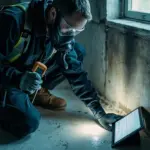
Moisture vapor coming up through the slab is the leading cause of epoxy floor failure. Contractors test for it with a calcium chloride kit or a relative humidity probe. If readings are high, a moisture-tolerant primer or a vapor barrier is added, and that cost shows up in the quote.
Edges, stairs, and detail work
Square-foot pricing assumes a flat rectangle. Garages with curbs, stem walls, stairs, floor drains, or painted stripes take longer and use more masking material. Some contractors roll edges by hand instead of cutting them, which is slower but gives a better look. The amount of detail in a space has an outsized effect on epoxy floor cost when the area is small.
Regional labor and material rates
Labor is usually 40% to 60% of the total installed price. In metro areas with high construction demand, that share rises. In rural markets, the material share can rise instead because delivery and minimum order fees get spread across fewer jobs.
Garage vs. basement vs. patio: where pricing shifts
The same coating behaves differently in each space, and contractors price them differently for good reason.
| Space | Common conditions | Pricing impact | Typical premium vs. base price |
|---|---|---|---|
| Garage | Vehicle traffic, oil drips, hot tires | Hot-tire-resistant topcoat, oil-tolerant prep | Baseline |
| Basement | Moisture vapor, limited ventilation, square layout | Moisture primer, low-odor resin | About 5% – 15% above garage |
| Patio or porch | UV exposure, weather, slope | UV-stable aliphatic topcoat, anti-slip additive | About 15% – 30% above garage |
| Workshop or utility room | Chemical exposure, heavy equipment | Higher-build system, chemical-resistant topcoat | About 20% – 40% above garage |
Garage floors get the most attention online, but basement and patio jobs are common reasons homeowners first encounter epoxy floor cost as a budget line. A patio quote is usually higher per square foot than a garage quote of the same size because of UV protection and the anti-slip texture that almost every exterior job needs.
DIY epoxy floor cost vs. hiring a pro
DIY kits are widely sold, and a homeowner with a clean slab and a free weekend can produce a respectable result. The savings are real, but they come with tradeoffs that are easy to underestimate.
A typical DIY kit for a two-car garage runs $400 to $900 for a water-based or 100% solids system, plus $100 to $250 for a rented grinder, patching compound, and roller supplies. That puts a DIY project in the $2.00 to $4.00 per square foot range before mistakes.
Where DIY projects usually go wrong:
- Skipping mechanical grinding and relying on an acid etch, which often leads to peeling
- Applying the coating outside the manufacturer’s temperature and humidity window
- Not testing for moisture before coating
- Pouring too thick or too thin and not working the material fast enough
Professional installation brings industrial grinders, moisture meters, and crew experience, which is why most manufacturer warranties require a certified installer. If you are weighing the two options, a useful threshold is this: DIY makes sense when the slab is in good condition, the area is small, and the finish does not need to be decorative. A pro is the safer choice when the slab has damage, the area is large, or the look matters.
How to read and compare epoxy floor quotes
Two quotes that look different on paper can be the same job, and two quotes that look the same can be very different jobs. The trick is to line up the scope line by line.
- Confirm the measured square footage and the number of coats.
- Check whether surface prep is a single line item or split into grinding and repair.
- Ask which primer and topcoat are specified, not just the brand name.
- Look for moisture testing and what happens if the test is high.
- Ask whether crack repair is included or billed per crack.
- Check the warranty terms, especially what voids coverage.
- Clarify the cure time and when the floor can be walked on or driven on.
A quote that answers all seven of those questions is easier to compare, and the answers usually explain the price difference between bids. This is the same general approach a homeowner would use for other large home projects, such as the planning steps outlined in our guide to planning a shower remodel without surprises.
Common add-ons and what they cost
Most add-ons are optional, but a few are worth budgeting for because they prevent early failure.
| Add-on | Why it is recommended | Typical added cost |
|---|---|---|
| Moisture vapor primer | Prevents bubbling on slabs with vapor pressure | $1.00 – $2.50 per sq ft |
| Anti-slip additive | Improves traction when wet | $0.50 – $1.50 per sq ft |
| UV-stable aliphatic topcoat | Stops yellowing and chalking in sunlight | $1.00 – $3.00 per sq ft |
| High-build clear topcoat | Adds abrasion resistance for vehicle traffic | $1.50 – $3.50 per sq ft |
| Cove base or wall detail | Seals the floor-to-wall transition for easier cleaning | $6.00 – $12.00 per linear foot |
| Decorative flake or metallic pigment | Visual upgrade, not structural | $1.00 – $4.00 per sq ft |
When a contractor quotes a single all-in number, ask for the breakdown. Most reputable installers will share it because they want you to understand what you are paying for.
Ways to keep epoxy floor cost under control
You cannot control resin prices, but you can control the choices that affect labor and waste.
- Schedule the job in the spring or fall shoulder seasons when contractor calendars are open.
- Clear the space and remove everything from the floor before the crew arrives.
- Patch small cracks yourself ahead of time if the contractor agrees it is acceptable.
- Choose a solid color or light flake blend over a metallic if budget matters more than appearance.
- Combine epoxy work with other slab projects, such as sealing or leveling, to share mobilization fees.
- Ask about leftover material from a nearby job, which some installers will sell at a discount.
None of these shortcuts the prep, and none of them should compromise the system. They simply reduce the labor hours and material waste that drive epoxy floor cost higher than the headline number.
How long an epoxy floor should last, and what that means for cost
Installed cost is only half of the value question. A well-installed residential epoxy floor with a quality topcoat usually lasts 10 to 20 years in a garage and 15 to 25 years in a basement with light foot traffic. Patio systems, because of UV and weather, tend to land closer to 8 to 15 years before a refresh is needed.
Annualized over a 15-year service life, even a $5,000 garage floor works out to roughly $330 per year, or about $22 per square foot of slab per year before inflation. A cheaper DIY job that fails in three years costs more per year than a quality pro install, which is one of the quieter reasons epoxy floor cost is worth thinking about as a long-term number rather than a one-time price.
When epoxy is not the right floor
Epoxy is a strong choice for many concrete slabs, but it is not universal. A few conditions push homeowners toward alternatives, and recognizing them early avoids paying for a coating that will not hold up.
- Slabs with active water intrusion or hydrostatic pressure need a moisture solution before any coating.
- Concrete that is still curing, usually less than 28 days old, should not be coated.
- Outdoor spaces that require a soft or warm surface underfoot may be a better fit for tile or pavers.
- Floors that will see constant standing water, such as around a pool, often do better with a textured concrete overlay.
If your project touches on a related home repair, the same planning mindset from a sewer line replacement project applies: diagnose the substrate, then choose the system that fits it.
A practical pre-quote checklist for homeowners
Before you call contractors, a short walkthrough of the space puts you in a better position to compare bids.
- Measure the floor and note any slopes, drains, or steps.
- Photograph cracks, spalls, and stains from several angles.
- Check the age of the slab if it is available from the builder.
- Note how the space is used: cars, storage, a workshop, or a gym.
- Decide whether you want a solid color, flake, or metallic finish.
- Set a target budget range so quotes can be tailored to it.
- Ask neighbors or local groups for contractor references with recent epoxy work.
Walking into a quote with this information saves the estimator time, which often shows up in the final price. It also gives you a clean way to compare the resulting numbers side by side.
Frequently asked questions
What is a fair price per square foot for an epoxy garage floor?
For a standard two-car garage in good condition with a solid color system, a fair professional price in 2026 usually lands between $4.50 and $10.00 per square foot installed. Flake and metallic systems run higher. Anything well below that range deserves a closer look at the prep and the materials specified.
Does an epoxy floor increase home value?
It can, especially in a finished basement or a garage that buyers see as part of the living space. Appraisers do not assign a fixed dollar amount to an epoxy floor, but a clean, durable floor in a well-maintained garage or basement supports the overall condition of the home. The improvement is more visible in listings than in appraised value.
How long does installation take?
Most residential garages take one to two days of active work, plus a cure window before the floor can be walked on and a longer wait before vehicles are parked on it. The full cure for most systems is several days, even when the surface feels dry earlier.
Can epoxy be applied over old paint or a previous coating?
Sometimes, but only after testing adhesion and identifying what the old coating is. Many contractors prefer to remove the old coating and start with a bare, profiled slab. Putting a new epoxy system over an unknown or failing coating is one of the fastest paths to a failed floor.
Is epoxy flooring slippery?
Plain epoxy can be slick when wet, particularly with a high-gloss topcoat. Anti-slip additives, textured flake systems, and matte topcoats all improve traction. The choice usually comes down to whether the floor will see water or oil and how barefoot-friendly it needs to be.
What is the difference between water-based and 100% solids epoxy?
Water-based epoxy is thinner, easier to apply, and lower in odor, but it builds a thinner film per coat. One hundred percent solids epoxy is thicker, more durable, and more chemical resistant, but it is harder to work with and has a stronger odor during installation. The choice affects both the look and the longevity, and it shows up clearly in epoxy floor cost.
Will an epoxy floor fix cracks in my concrete?
Coatings can bridge very small hairline cracks, but structural or moving cracks need repair before the floor is coated. A good contractor will route and fill active cracks and will not promise that the coating will hide major defects. The honest answer is that the floor will look better after coating, but the slab should be sound first.
How do I maintain an epoxy floor once it is installed?
Regular dust mopping and an occasional wash with a neutral pH cleaner is enough for most homes. Avoid harsh acids or solvents, and clean up oil spots before they sit for long periods. A urethane or polyaspartic topcoat can be recoated years later to refresh the gloss and extend the service life.
Can I coat a new concrete floor right away?
Most manufacturers require the slab to cure for at least 28 days before coating, and some recommend longer. A moisture test is the most reliable way to know whether the slab is ready, especially in basements or on-grade slabs that tend to hold more moisture.
Are there financing or bundled options that lower the upfront cost?
Some contractors offer payment plans, and home improvement lenders occasionally run promotions on garage or basement upgrades. Bundling epoxy with other concrete work, such as polishing or sealing an adjacent patio, can also reduce the per-job mobilization fee and bring the all-in epoxy floor cost down.

Leave a Reply