



Exterminator for rats: what to expect and how to choose one
You hear scratching in the wall at night, find a dark smear along the baseboard, or spot a rodent darting behind the trash can, and the next thought is usually the same: do I call an exterminator for rats, or can I handle this myself? A professional brings training, regulated rodenticides, and a method for finding entry points that most homeowners miss. This guide walks through what an exterminator actually does, how a typical rat service visit unfolds, what it tends to cost, and how to compare local providers so you can hire with confidence.
The scope below is written for the average single-family home or small business dealing with Norway rats or roof rats in or around the structure. It is not a substitute for an on-site inspection, because every building, neighborhood, and infestation is different.
Why a professional exterminator is usually worth it for rats
Rats are not just unpleasant. They chew wiring, contaminate food, damage insulation, and reproduce quickly. A single pair of Norway rats and their offspring can produce dozens of new rats in a year under the right conditions, which is why most homeowners who try to solve the problem on their own end up calling a pro after a few weeks of unsuccessful trapping.
Working with a qualified exterminator for rats changes the equation in three ways. First, the technician is trained to read the signs, including run patterns, rub marks, droppings, and gnaw marks, to figure out where the colony is moving and how many entry points exist. Second, professional-grade control products are often stronger and more precisely placed than what is sold over the counter, and they are applied in a way that reduces risk to children, pets, and non-target wildlife. Third, the visit usually ends with a written recommendation for exclusion work, which is the real long-term solution.
If you are only seeing one or two rats and the property is well sealed, a careful homeowner with snap traps and patience can sometimes solve the problem. For anything more than a minor sighting, an exterminator for rats will usually save time, reduce frustration, and limit the risk of a recurring infestation.
How a typical rat extermination service visit works
Although every company structures its service a little differently, most visits follow a predictable sequence. Knowing the steps helps you understand the quote you receive and the work being done.
- Phone consultation and history. The company asks when activity started, where droppings and sounds have been noticed, whether pets or children are present, and what previous control steps have been tried.
- On-site inspection. The technician walks the interior and exterior, looking for droppings, rub marks, burrows, gnaw points, and gaps larger than a quarter inch, which is roughly the size a rat can squeeze through.
- Identification. The species matters. Norway rats tend to burrow at ground level and live in basements and crawl spaces, while roof rats prefer elevated areas such as attics, soffits, and tree canopies. The control plan changes with the species.
- Sanitation and habitat review. The technician notes bird feeders, pet food, open garbage, dense ground cover, and other attractants, and recommends changes.
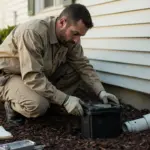
- Control placement. Bait stations, snap traps, and in some cases mechanical traps are placed along identified runways, both inside and outside, in tamper-resistant setups where needed.
- Exclusion recommendations. The technician lists openings that should be sealed, often with a written estimate or a referral to a separate exclusion service.
- Follow-up schedule. Most reputable providers return every one to three weeks until activity stops, and they document findings at each visit.
What control methods an exterminator for rats actually uses
The methods on the truck vary by company, by state regulations, and by the type of structure. A good technician will explain what is being used and why, and will leave a service ticket that lists the products and locations.
| Method | How it works | Where it is placed | Best use case |
|---|---|---|---|
| Snap traps | Mechanical kill using a spring bar | Along walls, behind appliances, in attics and crawl spaces | Interior control when pets and children are present and quick knockdown is needed |
| Tamper-resistant bait stations | Locked plastic box containing a rodenticide block | Along exterior perimeters, inside garages, and in commercial back-of-house areas | Exterior and commercial sites where non-target access must be limited |
| Glue boards | Adhesive surface that captures rodents | Inside utility rooms, inside secured retail back rooms | Limited use in homes; some companies avoid them for humane reasons |
| Mechanical multi-catch traps | Repeating trap that holds multiple rats alive | Kitchens of food service, basements, garages | Commercial accounts that need to monitor activity without poison |
| Exclusion materials | Steel wool, hardware cloth, metal flashing, concrete, door sweeps | Gaps around pipes, vents, foundations, garage doors, soffits | The long-term solution that prevents re-entry after control is achieved |
Many modern companies use an integrated approach that combines traps or bait stations with exclusion work. Pure poison-only programs tend to produce short-term results because dead rats inside walls can cause odor problems, and surviving rats can simply re-enter once the bait is gone.
How much an exterminator for rats costs
Pricing varies widely by region, by the size of the infestation, and by the type of structure. The numbers below reflect what is commonly seen in many U.S. markets, and they are useful as a planning range rather than a fixed quote.
| Service type | Typical price range | What is included |
|---|---|---|
| Initial inspection | $0 to $150, often free with treatment | Site visit, written plan, baseline service ticket |
| One-time general pest and rodent visit | $150 to $400 for a single-family home | Traps, bait stations, light exclusion, one follow-up |
| Monthly or quarterly rodent program | $40 to $80 per month after initial setup | Routine inspection, station service, ongoing exclusion as needed |
| Severe infestation cleanup | $500 to $2,000 or more | Multiple visits, extensive trapping, sanitation coordination, restoration referrals |
| Exclusion work (sealing entry points) | $300 to $1,500 | Hardware cloth, door sweeps, vent covers, foundation sealing |
Always ask whether the initial visit is free, whether follow-up visits are included, and whether the company guarantees that activity will stop within a defined window. Reputable companies offer a re-service warranty of 30 to 90 days for rat work, which means they will return at no charge if activity continues.
What to look for when choosing an exterminator for rats
Anyone with a pickup truck and a can of spray can call themselves a pest control company, so a little screening goes a long way. The points below are useful before you sign a service agreement or agree to a treatment plan.
- State license and certification. Ask for the state pest control license number. Most states publish a verification tool so you can confirm the license is current and that the company carries the correct categories for rodent work.
- Insurance and bonding. Request proof of general liability insurance and, where required, workers’ compensation coverage.
- Written inspection and plan. A serious exterminator for rats will leave a service ticket that lists the products used, the placement locations, the target species, and the recommended follow-up.
- Integrated approach. Be cautious of any company that only wants to drop bait and never mentions exclusion, sanitation, or trapping. Poison alone rarely solves a rat problem.
- Clear re-service terms. Ask what happens if activity continues. A clear written warranty protects you from paying twice for the same infestation.
- Local references and reviews. Look for recent reviews that specifically mention rat work, not just general pest control. Local experience matters because building styles, climate, and rodent pressure vary by region.
- Communication style. The technician should be willing to answer questions in plain language about what is being placed in your home and why.
Warning signs that you have a rat problem and not just a mouse
Many homeowners call about mice when the actual culprit is a rat, and the two require different strategies. A few quick checks can help you describe the situation accurately when you call.
- Droppings. Rat droppings are roughly the size of a grain of rice, around half an inch long, with blunt ends. Mouse droppings are smaller, closer to a third of an inch, and pointed.
- Rub marks. Rats leave dark, greasy trails along walls, beams, and pipes where their fur repeatedly rubs against the surface.
- Burrows. Norway rats dig burrows along foundations, under sheds, and in garden beds. A hole about two inches across near a structure is a strong sign.
- Sounds. Heavy scratching in walls, attics, or crawl spaces at night suggests rats. Mice make faster, lighter sounds.
- Damage. Rats gnaw on wood, plastic pipes, and even soft metals. New chew marks on stored items, electrical insulation, or food packaging are common clues.
Sharing these details with the exterminator on the phone helps them bring the right equipment and shorten the inspection time on site.
How long it takes to get rid of rats
The honest answer is that it depends. A small problem caught early, with good exclusion, can be resolved in two to four weeks. A larger colony with multiple burrows, an unsealed foundation, and abundant food can take two to three months of repeated visits. The main variables are the size of the colony, the cleanliness of the environment, and how quickly exclusion work is completed.
Setting realistic expectations matters. Any company that promises rats gone in one visit is selling a result that the biology of the animal does not support. What you should expect is a steady reduction in signs: fewer droppings each week, fewer sightings, and a quiet attic or basement at night. If signs plateau, the technician should adjust placement and revisit sanitation recommendations before simply adding more bait.
Health and safety considerations during treatment
Rodenticides and traps carry real risks, which is why a licensed exterminator for rats is the safer option for most households. Modern rodenticides are anticoagulants that work by preventing blood clotting, and they are dangerous to children, dogs, cats, and wildlife if misused. Tamper-resistant bait stations reduce that risk, but they are not a substitute for common sense.
- Keep children and pets away from stations and traps. The technician will explain which rooms or yards contain stations so you can manage access during treatment.
- Do not place loose bait yourself. Loose rodenticide pellets are a leading cause of accidental pet poisoning. Always use tamper-resistant boxes or traps.
- Watch for dead rats in walls. When a rat dies inside a wall cavity, the odor can last one to two weeks. A technician can advise whether the situation warrants opening the wall, sealing the cavity, or simply ventilating until the smell fades.
- Clean droppings with care. Hantavirus and other pathogens can be present in rodent urine and droppings. Spray droppings with a bleach-based disinfectant, let them soak, then wipe with disposable gloves and paper towels. Do not sweep or vacuum dry droppings, which can aerosolize particles.
What you can do to support the exterminator’s work
You are part of the solution, and the steps you take between visits matter as much as the bait and traps. The list below mirrors the recommendations most exterminators give on the first visit, and following them can shorten the timeline considerably.
- Store all pet food, bird seed, and dry goods in hard plastic or metal containers with tight lids.
- Take garbage out frequently and use bins with locking lids, especially in the garage and around the kitchen entrance.
- Remove clutter from basements, garages, and storage sheds so the technician can place stations along walls and in corners.
- Trim shrubs and tree branches at least three feet from the structure and keep firewood stored off the ground and away from the house.
- Repair leaking outdoor faucets and improve drainage, because standing water and damp soil attract rats.
- Seal gaps around pipes, vents, and utility lines with steel wool and metal flashing, not just expanding foam, which rats can chew through.
Exclusion: the part most homeowners underestimate
If there is one thing worth saying twice, it is that killing rats without sealing the building is a short-term answer. Rats can squeeze through openings the size of a quarter, climb rough walls, and chew through materials as soft as soap and some grades of plastic. Exclusion closes the door behind the control work and is the only reliable way to keep a new colony from moving in once the current one is gone.
A thorough exclusion job includes sealing gaps around plumbing penetrations, dryer vents, foundation vents, garage door frames, and where the siding meets the foundation. It also includes installing door sweeps on exterior doors, repairing damaged soffits, and capping chimneys with spark arrestors that rodents cannot pass through. Some companies include light exclusion in their standard service, but for serious work, a separate quote is common.
When the problem is bigger than rats alone
Sometimes what looks like a rat problem turns out to be a broader wildlife or sanitation issue. A good exterminator for rats will tell you when another species is involved or when the project is really about cleaning up after years of neglect.
- Roof rats and squirrels. Both animals can live in attics, and the control approach is different. If you hear daytime activity in the attic, especially at dawn and dusk, ask the technician to confirm the species.
- Dead animals in walls or under the home. A strong, persistent odor that does not respond to cleaning may point to a raccoon, opossum, or other animal that died in the structure. Wildlife removal and deodorizing are separate services.
- Contaminated insulation. Years of rodent activity in an attic often leave insulation soiled beyond cleaning. In that case, the exterminator may coordinate with an insulation contractor, which can also reduce allergens and improve energy performance.
Questions to ask before signing a service agreement
Once you have two or three quotes in hand, the conversation below tends to surface the differences between providers quickly.
- What is the target species, and how did you confirm it?
- Which products are you placing, and where?
- How many visits are included in the initial price?
- What is the re-service warranty, and what does it cover?
- What sanitation and exclusion steps do you recommend I do myself?
- Will the same technician return for follow-up visits, or will I see a different person each time?
- How will you document the work at each visit, and will I receive a copy?
The answers should be specific, not vague. A company that cannot clearly describe its plan is not the right company to hire.
How to compare local providers fairly
Price is only one variable. Two quotes that look similar can represent very different levels of service, and the cheapest option often ends up costing more because of repeat visits. A practical comparison approach is to look at the four factors below and weight them according to what matters most in your situation.
| Factor | What to look for | Why it matters |
|---|---|---|
| Inspection depth | Time spent on site, written plan, species confirmation | Deeper inspections usually produce more accurate plans and fewer callbacks |
| Control methods | Mix of traps, bait stations, and exclusion rather than bait alone | Integrated methods are more effective and lower risk than poison-only programs |
| Warranty | Written re-service window of 30 to 90 days for rat work | Protects you from paying twice for an unresolved infestation |
| Communication | Service tickets, clear pricing, accessible office staff | Strong communication is a good proxy for overall professionalism |
If you want a quick way to gather candidate companies, many homeowners begin with a local search and then read recent reviews that specifically mention rat work. From there, three phone calls will usually narrow the field quickly. You can also browse a directory of rat exterminators and the services they offer to see how providers in different regions present their work and what they include in a standard visit.
DIY versus professional rat control: an honest comparison
There is no shame in wanting to handle a small problem yourself. The comparison below can help you decide whether to pick up traps or pick up the phone.
| Criterion | DIY approach | Professional exterminator for rats |
|---|---|---|
| Upfront cost | Low, usually $20 to $60 for traps and a few bait stations | Higher, often $150 to $400 for the initial visit |
| Speed of resolution | Slow for anything beyond a single rat, because identifying entry points is difficult without training | Faster, because pros combine inspection, placement, and exclusion |
| Risk of misuse | Higher, especially with over-the-counter baits that are accessible to pets and children | Lower, with tamper-resistant stations and proper placement |
| Long-term effectiveness | Limited without exclusion work, so the problem often returns | Stronger because exclusion is part of the plan |
| Documentation | None, which can be a problem for landlords, property managers, and home sales | Written tickets, photos, and a paper trail that supports the warranty |
For homeowners who want to try a quick fix first, snap traps baited with peanut butter or chocolate, placed along walls and behind appliances, are the most reliable DIY option. Wear gloves when handling traps and reset them after each catch. If activity continues for more than two weeks or you find new droppings in fresh areas, it is time to call an exterminator for rats.
How the seasons affect rat activity
Rat pressure is not constant. In much of the United States, late summer and fall bring the most complaints because young rats born in spring are reaching adult size, and cooler weather drives rodents indoors in search of food and shelter. Spring is the second peak as overwintered colonies expand.
Knowing the seasonal pattern can help you time a service agreement. Signing a quarterly program in early fall, when rats are looking for warmth, often prevents a winter infestation that would be more difficult and more expensive to resolve. For commercial kitchens, grocery stores, and food warehouses, a year-round program is usually justified by the cost of a single regulatory violation.
What a good service ticket should include
You have the right to a clear record of what was done in your home. A thorough service ticket from an exterminator for rats usually contains the following information.
- Date and time of service, and the name of the technician
- Target species, based on the inspection
- Products applied, including the exact product name and EPA registration number
- Placement locations, written in plain language such as “exterior right corner of garage, near downspout”
- Number of stations or traps set, and any that were replaced
- Observations such as fresh droppings, gnaw marks, or new runways
- Recommendations for sanitation and exclusion, with priority items flagged
- Next visit date and any conditions for the warranty
Keep these tickets in a folder or take photos of them. If you ever sell the home or transfer the service to a new owner, the documentation is a small but meaningful proof of professional maintenance.
Final reminders before you book the visit
Rat problems rarely get better with patience. The longer a colony lives in the structure, the more entry points the rats create and the more difficult exclusion becomes. A prompt visit from a licensed exterminator for rats is usually the fastest, safest, and most cost-effective path back to a quiet home.
Before the technician arrives, take ten minutes to clear the area under the kitchen sink, behind the stove, and around the washing machine. Move pet food into hard bins, take out the trash, and jot down where you have seen droppings, heard noises, or noticed damage. Those few minutes of prep will help the inspection go faster and will usually lead to a more accurate quote.
Use the FAQ below for the questions that come up most often when homeowners compare exterminators, methods, and timelines.
Frequently asked questions
How quickly can an exterminator for rats start?
Most local companies can schedule an initial inspection within two to five business days, with same-day or next-day service available during peak season. If a provider cannot come out for more than a week, ask why; in many markets, that is a sign of high demand or limited staff.
Is it safe to stay home during rat treatment?
In most cases, yes. Tamper-resistant bait stations and snap traps placed along walls and in attics are designed to be safe around people when used as directed. If a product requires temporary evacuation, the technician will explain the reason, the product name, and the time required before re-entry.
Will the exterminator need to enter the attic or crawl space?
Often, yes, especially if roof rats are suspected. Attics and crawl spaces are common harborages, and the technician needs to look for droppings, runways, and entry points. Make sure those areas are accessible, and ask the company whether there is an additional fee for confined-space work.
How long does a rat extermination warranty last?
For most residential work, the warranty is 30 to 90 days from the last service visit. Commercial accounts often have longer warranties tied to a service agreement. Read the warranty language carefully so you understand whether it covers re-service, retreat, or both.
Can rats come back after the exterminator leaves?
They can, especially if exclusion work was not completed. A good company will check exclusion on every visit and recommend sealing as soon as control is achieved. Once the structure is sealed and food sources are managed, the risk of return drops sharply.
Do exterminators use poison for rats?
Many do, but only inside tamper-resistant bait stations placed in targeted locations. The technician should explain the product, the active ingredient, and the safety measures. If a company wants to scatter loose bait across the property, look for a different provider.
What is the difference between a mouse and a rat infestation?
Size, droppings, and damage are the easiest tells. Rats are larger, leave bigger droppings, and produce heavier gnaw marks. Mice can fit through openings the size of a pencil, while rats need at least a quarter-inch gap. The control plan changes with the species, so accurate identification matters.
How many visits does it take to get rid of rats?
A small problem may resolve in two to three visits over a month. A larger infestation with multiple burrows or widespread activity can take four to six visits over two to three months. The technician should give you a written estimate of the visit schedule after the first inspection.
Should I clean up droppings before or after the exterminator arrives?
Wait until after the inspection if possible, because droppings help the technician gauge activity. If you must clean, spray droppings with a bleach solution, let them soak for several minutes, then wipe with disposable gloves and paper towels. Avoid sweeping or vacuuming dry droppings, which can release particles into the air.
Is a quarterly pest control plan enough to prevent rats?
For most homes, a quarterly general pest plan keeps insects under control but may not be enough for rats, because rodent pressure fluctuates with the seasons and the surrounding environment. Many companies offer rodent-specific add-ons or monthly monitoring for an additional fee, which is usually a smart investment in areas with heavy rodent activity.

Leave a Reply